How to Make Your Website Discoverable by ChatGPT, Perplexity, and Google’s AI Overviews
Learn how to make your brand visible to ChatGPT, Perplexity, and Google AI Overviews through clarity, structure, and human-first content.
10/29/20254 min read
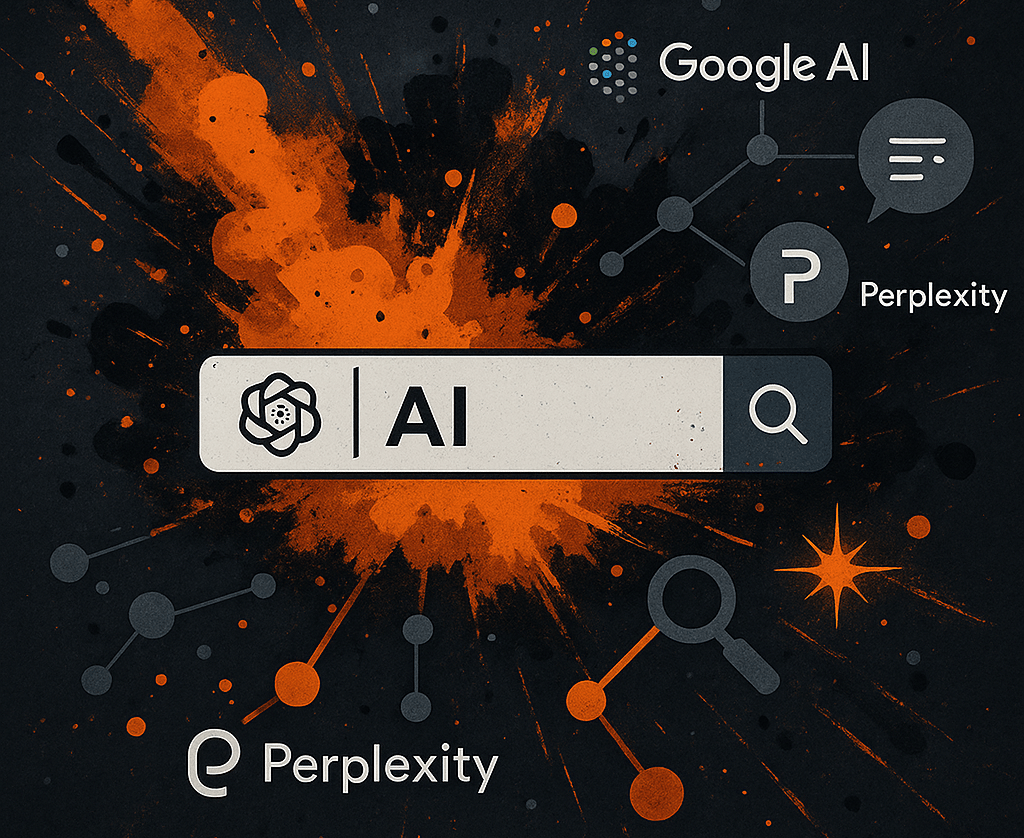
How to Make Your Website Discoverable by ChatGPT, Perplexity, and Google’s AI Overviews
Signal Over Noise: The Brands That Win in the Age of Intelligent Discovery
AI has changed how people find and trust brands. Tools like ChatGPT, Perplexity, and Google’s AI Overviews now generate answers, not lists — and they choose which brands to feature based on clarity, structure, and credibility. This guide explains how to make your website AI discoverable through smart structure, schema, and human-first writing.
Why AI Discoverability Matters (and Why SEO Isn’t Enough)
AI isn’t just changing marketing — it’s changing how people find and trust brands.
Discovery has shifted from search to synthesis.
Tools like ChatGPT, Perplexity, and Google’s AI Overviews no longer display lists of links. They summarise, interpret, and decide which sources — and brands — deserve to be referenced.
If your business isn’t part of those summaries, you’re not just hard to find — you’re missing from the very systems that shape what people see and believe.
That’s why AI discoverability now matters as much as being Google-indexed once did.
You’re no longer fighting for clicks — you’re fighting for inclusion.
What AI Discoverability Really Means
Large Language Models (LLMs) like ChatGPT, Gemini, and Claude are building an understanding layer of the web — a living knowledge graph of brands, people, and proof.
Being AI discoverable means:
Your brand is cited or summarised in AI-generated answers.
Your content is understood, trusted, and used to verify future responses.
Your name and message are represented accurately when people ask, “Who are they?”
In other words: you’re teaching AI how to talk about you.
And if you don’t, someone else — or something generic — will fill the gap.
Proof in Practice: What Google AI Knows About Vibe MKTG
Ask Google’s AI Overview: “Who is Vibe MKTG?”
Here’s what you’ll likely see:
“Vibe MKTG is a UK-based, native-AI marketing agency founded by Stephen Rumbelow, a former Chief Marketing Officer with over 20 years of industry experience. The agency specializes in building and running marketing systems powered by artificial intelligence to help ambitious businesses scale.”
That summary wasn’t written for Google. It was generated by Google’s AI Overview from publicly available, consistent content — across web pages, LinkedIn, press releases, and blogs.
It’s accurate because the brand has a clear, verifiable signal: the same story, tone, and proof reinforced everywhere.
That’s what AI rewards. That’s how discoverability compounds.
From Backlinks to Believability
Traditional SEO was built on popularity — links, clicks, and keywords.
AI discovery is built on believability — clarity, credibility, and consistency.
Old SEO vs Intelligent Discovery (AI)
Backlinks → Trustworthiness
Keyword density → Context and meaning
Click-through rates → Authority and accuracy
Search ranking → Reputation graph
Crawlable metadata → Structured understanding
The shift is profound:
Search engines ranked pages.
AI systems understand people, brands, and credibility.
How to Make Your Website AI Discoverable: A Practical Guide
Here’s how to send a strong, consistent signal across ChatGPT, Perplexity, and Google AI — without writing for robots.
1. Start Every Page with a TL;DR
AI tools summarise content fast. Give them the summary first.
Open each page with 2–3 sentences explaining what it’s about, who it’s for, and why it matters.
It helps both humans and LLMs grasp your message instantly.
2. Add Structured Data (Schema Markup)
Schema helps AI understand what your content means — not just what it says.
Add these schema types across your site:
Organisation schema – company name, logo, location, description, founder, and founding date.
Product / Service schema – what you offer, who it’s for, and the outcomes you deliver.
Person schema – for founders or subject-matter experts, linked to credible external profiles (like LinkedIn).
FAQ schema – 3–5 key questions with concise answers per page.
Structured data acts as your AI handshake — it validates your identity, scope, and relevance.
3. Connect Your Digital Ecosystem
AI doesn’t read in isolation — it cross-references context.
Link internally and externally so your brand forms a coherent “map” of trust:
About ↔ Services ↔ Case Studies ↔ Blog
Blog ↔ LinkedIn ↔ Press mentions
“About Me” ↔ LinkedIn profile
This tells AI that every mention refers to one credible, consistent source: you.
4. Write for Humans, Not Machines
Ironically, the best way to be understood by AI is to be more human.
Avoid keyword stuffing or robotic phrasing.
Write the way your customers ask questions:
“How do I protect my business from liability?”
“What’s the difference between SEO and AIO?”
Conversational clarity improves comprehension, engagement, and discoverability.
5. Build Credibility Through Evidence
AI weighs truthfulness over tone.
Support every claim with proof: data, testimonials, or external sources.
Link to credible references — Google and Perplexity prioritise traceable information they can fact-check.
6. Keep Content Alive
Recency signals reliability.
Update key pages quarterly — add new data, refine claims, and remove outdated references.
Google’s AI Overviews and ChatGPT’s browsing models value current, verified content.
7. Maintain Tone and Message Consistency
AI systems evaluate language patterns across platforms.
If your website, blog, and LinkedIn reinforce the same values and story, the model learns your identity faster — and cites you accurately.
Consistency builds semantic authority. Repetition builds recall.
From SEO to AIO: The Future of Search and Discoverability
Think of AIO (AI Optimisation) as SEO’s natural evolution.
SEO got you indexed.
AIO gets you understood.
AIO is about:
Structuring for comprehension, not crawls.
Writing for people, not machines.
Building a consistent reputation graph AI can verify.
Done right, AIO doesn’t just earn clicks — it earns inclusion.
And inclusion is the new visibility.
The Takeaway: Understanding Is the New Visibility
AI discoverability isn’t about gaming algorithms — it’s about earning trust at scale.
If your content is structured, credible, and human, AI systems will surface you naturally and accurately.
The brands that win won’t be the loudest.
They’ll be the easiest to understand and believe.
Because in the age of intelligent discovery, clarity still compounds.
Real results. No fluff. That's the vibe.
FAQs
1. What does “AI discoverability” mean?
It’s how easily your brand and content can be found, understood, and cited by AI systems like ChatGPT, Perplexity, and Google’s AI Overviews.
2. How is AI discovery different from SEO?
SEO focuses on ranking in search results. AI discovery focuses on being credible enough to appear in generated answers and overviews.
3. What’s the fastest way to improve AI visibility?
Add schema markup (Organisation, Person, Service, FAQ), start pages with TL;DRs, connect key pages, and align your story across LinkedIn and your site.
4. Do I need to “write for AI”?
No. You need to write clearly for humans. AI rewards clarity, truth, and consistency — not keyword density.