Most Businesses Are Using AI Like It’s PowerPoint — Here’s What Growth Leaders Do Differently
AI doesn’t level the playing field — it exposes it. Discover how growth leaders use AI to build self-learning systems that compound intelligence, not shortcuts.
10/30/20254 min read
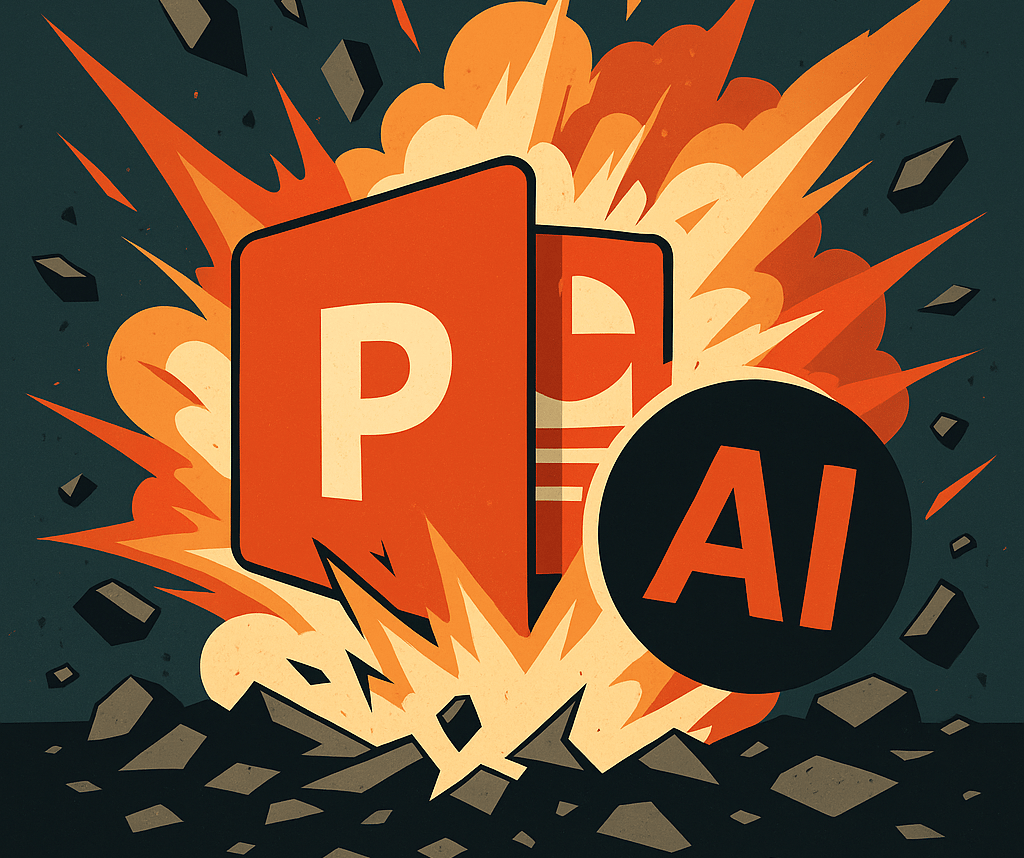
Most Businesses Are Using AI Like It’s PowerPoint
AI isn’t a tool you “use” — it’s a system you design.
It doesn’t level the playing field — it amplifies it. The best use it to learn and lead; everyone else uses it to cut corners.
The new advantage comes from combining human judgement with machine learning to build adaptive, compounding growth systems.
The PowerPoint Problem
Most companies are still using AI like it’s PowerPoint — a tool to make what they already do a bit faster or shinier. They open ChatGPT, type a few prompts, and call it innovation.
That’s not transformation. That’s admin.
The real shift isn’t about what AI produces. It’s about how it connects everything — data, decisions, creativity, and performance — into one continuous, adaptive growth loop.
AI’s power is orchestration, not automation. It’s the nervous system of modern growth — sensing, learning, and improving every time it’s used.
From Campaigns to Continuous Systems
Traditional marketing ran in bursts: quarterly campaigns, fixed budgets, rinse and repeat.
AI-powered growth is continuous. It doesn’t stop. It evolves.
Think of it as a living feedback loop:
Listen: Capture customer signals from every channel.
Learn: Interpret what’s resonating and what’s not.
Adapt: Redeploy, retarget, and refine in real time.
Compound: Every loop strengthens precision, trust, and ROI.
When this system runs properly, growth stops being linear. It compounds — and that’s where real advantage begins.
AI Doesn’t Level the Playing Field — It Exposes It
There’s a myth that AI levels the playing field. It doesn’t. It magnifies whatever’s already there.
Average people and companies will use AI to take shortcuts — faster blogs, cheaper posts, and more of the same noise. A-players use it to learn faster, think deeper, and grow stronger.
AI multiplies intent.
If your goal is to look productive, it’ll make you faster at being average.
If your goal is to be better — more strategic, more customer-focused, more disciplined — AI will accelerate you past everyone else.
AI doesn’t democratise intelligence. It scales discipline, curiosity, and intent.
From Human-Centric to Human-Directed
AI isn’t replacing humans — it’s replacing human limitation.
For decades, growth was built on gut feel. Marketers guessed what worked.
Now AI reveals patterns we couldn’t see:
Which customers are warming up before they buy.
Which messages evoke emotion, not just clicks.
Which parts of your funnel are leaking revenue.
Humans still lead — but AI makes every decision sharper.
The future is human-directed, machine-amplified growth.
What Most People Still Don’t Get About AI
It’s not just automating work — it’s redesigning it. The next-generation marketing team looks more like a growth operations unit than a creative department.
Data isn’t the differentiator. Everyone has data. The edge is how fast you turn insight into action — and action into learning.
Your CRM is now your brainstem. Connected to AI, it becomes an intelligence layer — predicting, prioritising, and personalising in real time.
Creative is the new code. As logic becomes automated, creativity becomes the differentiator. Taste and empathy are your true IP.
AI without architecture is chaos. Tools on their own create noise. Systems create scale. Winners are building unified growth architectures that connect every process, channel, and dataset.
The AI Growth System Blueprint
Modern growth runs across five connected layers:
Define: AI identifies ICPs, segments, and demand patterns. Humans decide where to focus.
Find: AI automates outreach and optimises spend. Humans shape the story.
Win: AI detects intent and refines messaging dynamically. Humans build trust and close deals.
Retain: AI predicts churn and triggers personalised engagement. Humans deepen loyalty.
Measure: AI unifies data into one truth. Humans interpret and iterate.
When each layer feeds the next, your business stops reacting — and starts anticipating.
The New Role of Leadership
The next generation of CMOs and founders won’t manage campaigns — they’ll design systems. They’ll orchestrate people, processes, and AI agents into one intelligent growth machine.
Their KPI won’t just be ROI. It’ll be learning velocity — how fast their organisation adapts to reality.
AI doesn’t make leadership easier. It makes it transparent. You can’t hide behind “gut feel” when the data shows what’s true.
Where to Start
Start small, think system. Pick one workflow — like lead scoring or reporting — and build an AI loop around it.
Automate insight, not output. Use AI to surface truth, not to fill time.
Measure feedback loops. Track how each iteration improves speed, accuracy, and impact.
Redefine your metrics. Stop measuring activity. Start measuring learning velocity — how much smarter you are than last quarter.
The Takeaway
AI isn’t another marketing tool. It’s the operating system for modern growth.
Used well, it compounds human intelligence. Used poorly, it compounds mediocrity.
It doesn’t level the playing field — it separates those who use it to look busy from those who use it to build better businesses.
The question isn’t whether AI will change your marketing.
It’s whether you’ll build a system that keeps changing with it.
Ready to build your AI growth system?
Let’s connect your insight, content, and performance into one adaptive, learning engine.
👉 Book a 30-minute strategy session with Vibe MKTG
FAQs
1. Does AI actually give smaller businesses an advantage?
Not automatically. AI doesn’t level the playing field — it amplifies what’s already there.
If you have a clear strategy, AI makes it sharper and faster. If you don’t, it just helps you make the wrong decisions faster.
2. What’s the difference between using AI as a tool and building an AI system?
Using AI as a tool means doing tasks in isolation — writing, analysing, designing.
Building an AI system means connecting those tools so they learn from each other — creating a feedback loop that improves over time.
3. Where should I start if I want to build an AI growth system?
Start small. Choose a process with measurable impact — like content planning, ad optimisation, or reporting. Automate it, track the results, and expand as your system learns.
4. Will AI replace marketing teams?
No. It replaces manual thinking, not creative strategy.
AI can replicate output, but not judgment or empathy. The future teams will combine creativity, systems thinking, and data literacy.
5. How do I know if my company is using AI effectively?
Ask: Are we learning faster than last quarter?
If AI is just saving time, it’s automation.
If it’s improving decisions and showing you what works faster, it’s a system — and that’s when the magic happens.
6. How long before I see results from AI?
You’ll see efficiency gains within weeks, but real transformation happens after 3–6 months — when your system starts learning and compounding ROI.
7. What’s the biggest mistake people make with AI right now?
Confusing speed with strategy. Anyone can make more content or automate tasks. The real advantage comes from connecting everything — insight, content, channels, and performance — into one coherent system.